Navigating the Industrial Labyrinth: Unraveling the Forklift Key Mystery in Resident Evil Requiem
- 01-03-2026
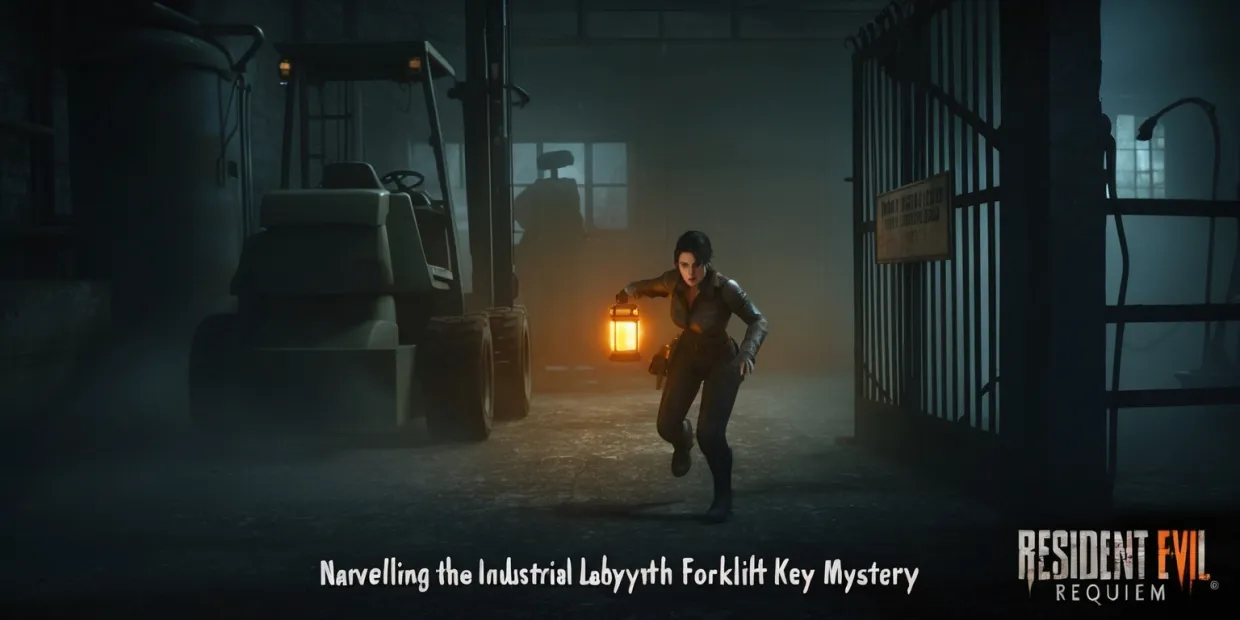
The eerie atmosphere of Resident Evil Requiem sets the stage for a labyrinthine puzzle that challenges "not just your ability to tackle challenges but also your" nerve. In this intricate adventure, subtle clues and hidden tools pave the way through perilous corridors and tense encounters. A central element of the escape from the foreboding Basement of Rhodes Hill Care Center involves a unique sequence of steps revolving around the Forklift Key. As you navigate disquieting hallways and shadowy rooms, each item discovered demands a careful approach, and every twist feels like a race against time. The detailed journey through the power puzzles is filled with unexpected turns and high stakes, testing your wit and resourcefulness at every stage.
Emergence of the Forklift Mystery
The journey begins with your initial encounter with a towering Forklift that looms unexpectedly in the small lobby just outside Inspection. Here, the game Crafts an environment brimming with tension and urgency as… you become aware of a crucial missing piece—the Forklift Key. In this early phase, the The surroundings have been carefully crafted to spark curiosity and… observation. As you gather your bearings, you understand that small, seemingly insignificant items, like the joint plug lying by the machinery, hold the key to progressing further. Every element in this grim setting is interwoven with mystery, prompting you to analyze each nook and cranny. Your growing curiosity and cautious progress serve as a perfect introduction Here's a rephrased version: "to the distinctive fusion of high-octane action and mind-challenging puzzles" solving that is Resident Evil Requiem.
Tracing the Steps of a Hidden Puzzle
Pressing forward from the discovery of the Forklift, you are quickly thrust into a series of deliberate, interdependent tasks. The initial phase involves ensuring that the joint plug is safely collected from the vicinity adjacent to the imposing Forklift. The step-by-step requirements, intentionally layered, demand revisiting specific areas for what might appear to be minor items that will later have significant impact. This design philosophy enhances the gameplay by intertwining exploration with puzzle mechanics. Each small victory, such as picking up an essential component, builds your confidence and deepens your engagement. As the stakes escalate, the intricate design starts to reveal its secrets, hinting at a broader puzzle that ties together disparate sections of the basement in a cohesive narrative.
Venturing Through the Concealed Corridors
Rather than escaping the area via the obvious exit, the game encourages a diversion into a less conspicuous vent directly opposite the Forklift. Maneuvering through this hidden passage, you arrive at an area known as the Workshop—a space that adds layers to the exploration and puzzle-solving experience. The Workshop, with its cluttered tools and cryptic machinery, is emblematic of the game’s commitment to immersive environments where every object has a story. Here, the craft of game design shines through, as the space "beyond fulfilling a mere practical role, it also" as a narrative device. The careful attention to detail within the Workshop reinforces the importance of exploration, as well as the intricate relationship between the environment and the tasks required for progress.
Reconnecting with the Origins of the Puzzle

After emerging from the claustrophobic confines of the Workshop, your next critical step involves retracing your route back to the beginning of the Basement. This return journey is pivotal, as it reintroduces you to a familiar yet transformed setting near your initial entry point. In this area, the placement of a joint plug into the Power Distributor marks the next phase of the puzzle. Transitioning seamlessly from one space to another is executed with deliberate care, ensuring that the logic behind each step remains grounded in the foundation of the mystery you’re solving. The deliberate re-encounter with earlier locations not only provides a sense of continuity but also challenges you to perceive well-known surroundings with a refreshed outlook, as each revisit unlocks further secrets crucial to your escape.
Unlocking the Mechanics of the Power Distributor
With the joint plug in place at the Power Distributor, a sequence of doors and hidden panels is activated, leading you into a compact room housing a movable crate. This newly unlocked area introduces the high-stakes environment of the Boiler Room. The room, with its looming machinery and haunting echoes, adds a layer of urgency to the assembly of clues and objects. Critical within this room is the recognition of the connection between the crate, the machinery, and further puzzle elements such as the Square Socket Wrench positioned nearby. This stage not only underscores the game’s dynamic use of spatial puzzles but also reinforces the thematic interlink between industrial settings and the survival horror genre. Each mechanically charged part of this sequence is meticulously designed to test both your memory and decision-making prowess.
Exploring the Industrial Maze of the Boiler Room
As you navigate the dimly lit paths of the Boiler Room, the environment imbues a sense of foreboding mystery accentuated by the introduction of new mechanical tools. In this dramatic setting, the arrangement of pipes, valves, and panels creates a tangible tension, urging you to proceed with both caution and curiosity. The need to collect the Square Socket Wrench, for instance, is not immediately apparent but becomes essential as you approach the enigmatic panel within the Collection Pool area. Amidst the creaks and clanks of the dilapidated industrial apparatus, each movement feels deliberate. The design of this area masterfully marries function with atmosphere, evoking a distinct feeling of impending challenge. The interplay between light and shadow, along with sporadic encounters that test your timing, elevates the experience into a carefully constructed narrative of survival and ingenuity.
Intertwining Fate with Mysterious Company
The appearance of the enigmatic Girl adds an intriguing twist in your ongoing puzzle-solving adventure. Her presence is seamlessly interwoven into the fabric of the narrative fabric of Resident Evil Requiem, emerging at a moment when tension peaks. Strategically, you find yourself maneuvering her around complex machinery, an unconventional strategy designed to maintain access to areas previously sealed off. This segment of the unfolding events further deepens the sense of urgency and interdependence seen in the game’s design, as every character and item plays a crucial role. The implications of aiding or interacting with her are far-reaching, encompassing both the logistics of the puzzle and the narrative’s emotional depth. By integrating the actions of a secondary character into the broader puzzle scheme, the game enriches its tapestry of challenges, forcing you to balance immediate tactics with overarching goals.
Discovering the Processing Chamber Secrets
The Processing chamber stands out as a pivotal arena where multiple puzzle strands converge. Upon entering this room, you are confronted by layers of hidden functionalities and interactive devices that require razor-sharp attention. It is here that the third and final joint plug is found alongside the elusive Forklift Key, a discovery that changes the trajectory of your mission. The structured environment of Processing—rich with compartmentalized spaces and purposefully positioned objects—illustrates the methodical approach behind the puzzle’s design. Every detail from the dim lighting to the subtle spatial cues informs your strategy. The discovery here is not accidental but the result of careful observation and determination, as you piece together disparate elements into a comprehensive plan that guides you to the life-saving key referenced throughout your earlier explorations.
Strategic Utilization of Environmental Shifts
After grasping the importance of the Forklift Key and its adjacent components, the game introduces another layer of complexity by requiring you to maneuver through the Processing area in a non-linear fashion. Specifically, you are tasked to exit the chamber and reenter it via Inspection, forming a strategic loop that grants access to additional areas. This transition is critical for advancing in the puzzle, as it creates a second pathway that bypasses previous obstacles and opens up new possibilities. The interplay between reentry and exploration is a testament to the game’s innovative design, encouraging repeated interaction with key areas while rewarding meticulous attention to location details and previous encounters. The clever use of environmental shifts not only challenges your spatial awareness but also reinforces the immersive storytelling that is so central to Resident Evil Requiem’s appeal.
Fine-Tuning the Forklift’s Operational Dynamics
In the midst of these intricate developments, the mechanics of the Forklift itself emerge as both a tool and a focal point in the narrative. Once the Forklift Key is collected—discovered alongside a lifeless figure in Processing—the possibility to power and operate the vehicle opens up a completely new dimension of problem solving. This part of the game not only emphasizes mechanics and player interaction but also highlights the dual role of in-game objects: they are both narrative devices and essential tools. Maneuvering the Forklift is carefully choreographed to unlock additional corridors, facilitate rescues, and secure crucial items like the final joint plug. The deliberate design of these sequences is tailored to test your precision and strategic planning, blending the mechanical with the mystical in a high-stakes race against the closing corridors of a dim and foreboding basement.
Charting a Course Toward an Uncertain Escape
The final segments of this elaborate puzzle transform the gameplay into a critical race against time and circumstance. As you align the various elements—the Forklift Key, the joint plugs, the mechanical tools, and the meticulously designed pathways—the game drives you towards a tangible sense of resolution amid uncertainty. Each step, from strategically moving the Forklift to the thoughtful collection of scattered objects, constructs a layered narrative of challenges and triumphs. The careful orchestration of environment, character, and machinery into a coherent whole exemplifies the ingenuity behind Resident Evil Requiem’s design. Here, every action taken, every pathway reexamined, and every newly discovered tool is interwoven into a dynamic tapestry of puzzle solving that leaves you with both a heightened sense of accomplishment and anticipation for what lies ahead.