

Grand Theft Auto VI arrives with the kind of pressure only a few games in history ever face. After years of speculation, leaks, trailer breakdowns, and endless forum debates, it finally has to prove itself not just as the next GTA, but as the open-world benchmark everyone will measure against for years. Having spent time with it, I can say this much: Rockstar has made a game that feels less like a sequel and more like a living, breathing event. It is loud, ambitious, and in places almost absurdly confident, yet it also carries the same small design frustrations that have always followed the series around.
What stands out first is scale, but not the empty kind. Vice City is back in a far more layered form, and the surrounding region gives the world a real pulse. Streets feel active, highways feel dangerous, and side activities are no longer just map clutter. The city does that rare open-world thing where you are constantly tempted to ignore the main path. You start intending to go somewhere important, then a roadside scuffle, an odd conversation, a spontaneous police chase, or a crooked opportunity pulls you off course. That sense of drift is where GTA VI is at its strongest.
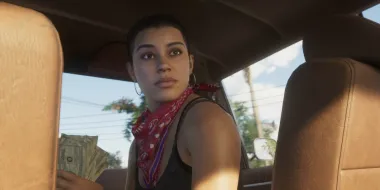
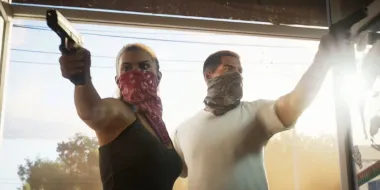
The writing leans into criminal excess, social satire, and character-driven chaos, but it is more restrained than some players may expect. That is not a weakness. It lets the world breathe. The two lead characters are memorable in different ways, and the push-pull between them gives the story real energy. Their relationship is messy, believable, and often funny without turning into parody. Rockstar still loves blunt irony, but here it feels better targeted. The jokes land more often because the world around them is more grounded. When the game wants to be serious, it earns it.
As for gameplay, this is where the experience becomes familiar in the best and worst ways. Gunplay is tighter, movement is smoother, vehicles handle with more weight, and the overall interaction model feels less stiff than past entries. You can tell Rockstar has studied how players actually move through open worlds now. Cover feels cleaner, traversal is less clumsy, and mission pacing benefits from small usability improvements. Still, this is unmistakably a GTA game. If you play expecting a radical reinvention, you may be surprised by how much of the old DNA remains. The formula is refined, not replaced.
The crime sandbox remains excellent. Random events, emergent police encounters, robbery setups, and street-level opportunism all feed into a loop that keeps you exploring. I appreciated how often the game rewards curiosity without shouting about it. You can spend hours chasing the story, or you can simply roam, get into trouble, and let the world tell its own little stories. That freedom is still Rockstar’s signature strength. Few studios make a place feel this reactive, this suggestive, this willing to turn a simple drive into a memory.
That said, the game is not perfect. Some mission structures still rely on heavy scripting, and when the invisible rails show, the illusion cracks a bit. A few sequences demand very specific behavior, which can clash with the otherwise open-ended fantasy. There are also moments where the AI feels oddly inconsistent, especially during large shootouts or high-chaos escapes. It never ruins the session, but it does remind you that the game is juggling more systems than it can always elegantly control. For a series built on freedom, those edges matter.
Visually, Grand Theft Auto VI is stunning in the way only a top-tier Rockstar release can be. The lighting deserves special praise. Sunset over the city, storm-heavy skies, wet pavement at night, reflective glass, cluttered interiors, and the dense traffic glow all combine to create an atmosphere that feels expensive in every frame. Character animation is another highlight. Faces convey more subtlety than before, and crowd behavior helps the world feel populated rather than simply filled. Even ordinary locations have texture. Convenience stores, beach bars, suburban homes, garages, and alleyways are all built with enough detail to invite close inspection.
Audio design is equally strong. Engines roar differently depending on the vehicle, sirens slice through traffic with real urgency, and the city itself has an ever-present hum. Music selection, as always, is a major part of the identity. Radio stations help define mood, and the soundtrack selection supports the game’s blend of absurdity and menace. The voice work is excellent across the board, and the performances carry scenes that might otherwise be standard crime-story material. There is an authenticity to the delivery that makes even exaggeration feel lived-in.
If you are the kind of gamer who likes to experiment, GTA VI has plenty to offer beyond the campaign. The open world naturally invites replay, and like every major entry in the series, discussion around cheats and mods will be part of its long tail. On launch, official support for playable cheats tends to be limited or structured carefully, while mods are typically a PC conversation and not something the console versions are built around in a formal sense. That matters because this game is already being treated like a platform, not just a release. Players will want to bend it, break it, and rebuild it into something personal. That impulse is part of the GTA legacy.
Another point worth mentioning is how the game balances realism with entertainment. It is more believable than older entries in a number of ways, but it never becomes overly mechanical. You still get the chaos, the satire, and the over-the-top scenarios, yet the moment-to-moment interactions feel more considered. The result is a world that people will spend ages dissecting. Some will focus on systems, others on secrets, others on whether hidden details point to future content. That sort of obsession only happens when a game gives players enough confidence to look closely.
For all its strengths, there is an argument that GTA VI is at its most impressive when it is simply being a world rather than an agenda. Freeform play brings out the best in it. Hop in a car, follow the noise, take a detour, and let the city surprise you. That simple loop is still incredibly effective. In modern open-world design, a lot of games say they want to offer freedom, but few understand how to make it feel meaningful. Rockstar still does. Even when the mission design occasionally tightens the leash, the broader structure keeps offering reasons to step away and explore.
On balance, this is one of the most accomplished open-world games ever made, and that is not praise I hand out easily. It does not completely escape the series’ old habits, and some players may wish for more systemic flexibility or fewer scripted moments. But the ambition is undeniable, the presentation is elite, and the world is so richly constructed that you forgive a great deal while playing. That’s the mark of a special release. It holds your attention not by force, but because it keeps making you curious.
Grand Theft Auto VI is not just a return to Vice City. It is Rockstar reminding everyone why the series became the standard in the first place. If you play for story, for chaos, for atmosphere, or for a technically impressive sandbox that will dominate conversations for years, this is a must-see release. It is messy in places, brilliant in many more, and built with the kind of confidence that only arrives when a studio knows the entire industry is watching.
How to download Grand Theft Auto VI
Availability & Launch: Grand Theft Auto VI is a premium release, so it is not free. You will need to download it from official storefronts or the publisher’s launch channels once it is available in your region.
Platforms: Confirmed support is expected on current-generation consoles first, with PC typically arriving later for Rockstar releases. If you are on unsupported systems such as older consoles or mobile devices, there is no native version to download, and cloud play or an emulator would only be relevant if an official service eventually supports it.
Install: Buy or redeem the game on your chosen platform, download the full client, then follow the on-screen install prompts. On PC, make sure your launcher and storage space are ready before you install.
System Requirements: For PC, expect a modern multi-core CPU, 16 GB RAM or more, and a strong GPU with ample VRAM; Mac and Android are not expected to have native support at launch, so there are no reliable minimum specs to list for those platforms.
Cheats / Mods: Cheats may appear in limited official form later, but mods are usually a PC-only scene and often depend on community tools. Console versions generally have tighter restrictions.
Unblocked Access: It is not an unblocked game for school or work networks by default. If access is restricted, you would normally need legitimate home access or approved network permissions to play.
Pros
- Rich, highly detailed open world that feels alive and reactive
- Strong visual presentation with impressive lighting, animation, and environmental detail
- Improved gunplay and movement that feel smoother than previous entries
- Memorable lead characters with a believable relationship and strong chemistry
- Excellent audio design, including vehicles, ambience, voice acting, and radio stations
- Great sense of freedom and emergent gameplay that encourages exploration and experimentation
- Side activities and random encounters add variety and help the world feel dynamic
Cons
- Some missions still rely heavily on scripting, limiting player freedom in key moments
- AI can feel inconsistent during large shootouts or chaotic escapes
- The game retains familiar GTA structure, so it may feel less innovative than some players expect